| Welcome, Guest |
You have to register before you can post on our site.
|
| Forum Statistics |
» Members: 640
» Latest member: Eafshani
» Forum threads: 4,892
» Forum posts: 86,875
Full Statistics
|
| Online Users |
There are currently 818 online users.
» 0 Member(s) | 816 Guest(s)
Applebot, Google
|
| Latest Threads |
Oliver H Powell at Stones...
Forum: Assassination
Last Post: jbarry
11 hours ago
» Replies: 1
» Views: 158
|
Copies of Dr Leale's Acco...
Forum: Assassination
Last Post: jbarry
Yesterday, 04:59 PM
» Replies: 3
» Views: 460
|
Changing Look of Lincoln'...
Forum: Abraham Lincoln before his Presidency
Last Post: Gene C
Yesterday, 01:02 PM
» Replies: 0
» Views: 34
|
Who Said This?
Forum: Trivia Questions - all things Lincoln
Last Post: Gene C
09-27-2026, 05:00 PM
» Replies: 617
» Views: 1,346,931
|
Lincoln's Gloves
Forum: Assassination
Last Post: Steve
09-27-2026, 12:00 PM
» Replies: 1
» Views: 156
|
Springfield Tour
Forum: Other
Last Post: Gene C
09-27-2026, 07:22 AM
» Replies: 501
» Views: 1,478,706
|
Who is this person?
Forum: Trivia Questions - all things Lincoln
Last Post: RJNorton
09-15-2026, 10:50 AM
» Replies: 2,215
» Views: 5,789,733
|
Auction Sept. 9, 2026 Jun...
Forum: News and Announcements
Last Post: Anita
09-07-2026, 06:42 PM
» Replies: 0
» Views: 324
|
The Rambler - J Harry Sha...
Forum: Assassination
Last Post: Jim Woodall
09-02-2026, 03:39 AM
» Replies: 0
» Views: 449
|
An In Depth View Of Mary ...
Forum: Mary Lincoln and the Boys
Last Post: Juan Marrero
08-31-2026, 09:06 AM
» Replies: 5
» Views: 11,430
|
|
|
| Preponderance of the Evidence in a Civil Trial |
|
Posted by: David Lockmiller - 03-21-2020, 12:51 PM - Forum: Abraham Lincoln before his Presidency
- Replies (31)
|
 |
I had a question on the subject of the Preponderance of the Evidence in a Civil Trial and recalled that Lincoln had something to say on this subject. So, I Googled the subject and the top return was . . .
https://rogerjnorton.com/Lincoln102.html
The Fehrenbacher entry on this topic is at the bottom of Roger's page.
In a civil case, Lincoln was once asked to define the term preponderance of the evidence. He said: "Gentlemen of the jury, did you ever see a pair of steel yards or a pair of store scales? If you did I can explain, I think, to your satisfaction the meaning of the word. If the plaintiff has introduced any evidence, put that in the scales and have it weighed. Say it weighs sixteen ounces. If the defendant has introduced any evidence in the case, put that in the scales; and if that evidence weighs sixteen ounces, the scales are balanced and there is no preponderance of evidence on either side. There are four witnesses on each side of this case. If the plaintiff's evidence weighs one grain of wheat more than the defendant's, then the plaintiff has the preponderance of evidence - his side of the scales goes down, is the heaviest. If this defendant's evidence weighs one grain of wheat more than the plaintiff's, then the defendant's side of the scales goes down, is the heaviest; and that movement of the scales tells what is the preponderance of evidence. Now apply this illustration to the state of your mind on weighing the evidence for the plaintiff and defendant." Recollected Words of Abraham Lincoln compiled and edited by Don E. Fehrenbacher and Virginia Fehrenbacher (Stanford, Stanford University Press, 1996), p. 243.
The civil case took place in Coles County and the jury was having much trouble understanding the phrase "preponderance of the evidence." Finally, Lincoln tried his hand at explaining the terminology to the jury.
Fehrenbacher gave Herndon's evidence a "D" rating because "[t]here is no assurance that Herndon himself heard these remarks. He did not ordinarily accompany Lincoln on the circuit."
Lincoln's explanation to the jury is both mathematical and non-mathematical. How much does a grain of wheat weigh? For this is the difference necessary for a jury to determine the "preponderance of the evidence" in any civil case to this day.
I have posted this thread because this is not the first time that Roger as a source of information was listed by Google as the first choice in a Google search of mine. But to be fair to other sources, "Lincoln" is often one of the terms of my Google searches. So, the result is not so surprising.
Thank you, Roger.
|

|
|
| Lincoln visits Concord N.H. |
|
Posted by: Craig Hipkins - 12-14-2019, 01:24 PM - Forum: Abraham Lincoln before his Presidency
- Replies (5)
|
 |
I have been reading an interesting book about Lincoln's visit to New Hampshire during the campaign of 1860. On the evening of March 1, 1860 Lincoln spoke to a large gathering at Phenix Hall in Concord. A witness recalled from memory 49 years after the event that there was a pelting rain. He clearly remembered seeing "Lincoln drawn down Main street by four beautiful black horses and standing up in the carriage the better to be seen."
The book is called "Abraham Lincoln in New Hampshire" by Elwin Page. It is an interesting read!!
|
|
|
|
| 1860 Republican Convention and "Counterfeit tickets" Is it true? |
|
Posted by: Mylye2222 - 12-08-2019, 04:59 PM - Forum: Abraham Lincoln before his Presidency
- Replies (2)
|
|
A few times ago I watched a CNN documentary re 1860 presidential race. Pretty interesting with, among commentators, Clinton campaign guru John Podesta.
They recounted the Republican Convention in Chicago's wignam. And they said that at first, Seward was the favorite and Lincoln had only for him the Illinois delegates. So his staff tried, as stated, to play influential games. They stormed the hall with paid ordinary citizens as "delegates" who cheered Lincoln and took all the seats of regular delagations in the Wignam. For their admission, they were given tickets which were counterfeit.
Questions?
As I know, Lincoln himself didn't attend the convention and stayed in Springfield and aides came regularly to him to report how things were going in Chicago.
So, did he ordered the "fake delegates" manœuvre to ease himself the nomination? John Podesta thinks so.
It's weird given the fact Lincoln usually didn't play dirty politically, since the James Shields stuff. Although it was not proper fraud, but more "influence play" as the fake delegates didn't actually vote, but instead changed the general convention's mood by building a momentum for Lincoln, so it was just "a little trick" it's nontheless troubling.
Did Lincoln ordered that? Maybe because before he lost twice to Douglas and didn't wanted a third loss in a row? Did he gave the order to campaign staff to recuit those "fake delegates" or did the staff in Chicago acted by themselves?
|
|
|
|
| 1860: Lincoln Visits Five Points. |
|
Posted by: Mylye2222 - 12-02-2019, 02:10 PM - Forum: Abraham Lincoln before his Presidency
- Replies (9)
|
|
Aside from his infamous Cooper Union speech in NYC, Lincoln took the time during his stay to visit Five Points, a high criminal rate poor neighborhood in the City. From what I've read ae, it was the US equivalent of White Chapel in London. But by 1960, there were reforms. Street children and youth at risk were taken care of in institutions. Lincoln stopped by one of them, the House of Industry. It was an unplanned visit. He sat in a Sunday School class amid kids, and then the teacher asked a few words from him. According to this link partially copying a period paper piece, Lincoln told them about his own youth in difficulty and instructed them to keep up fighting to inprove their condition and leave their destitute past behind.
https://ephemeralnewyork.wordpress.com/t...ve-points/
|
|
|
|
| Nancy Lincoln's Grave |
|
Posted by: Gene C - 09-10-2019, 02:49 PM - Forum: Abraham Lincoln before his Presidency
- Replies (14)
|
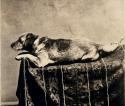 |
At the Lincoln Boyhood National Memorial,
between the visitor's center and a reconstructed log cabin, lies a small cemetery
Here a modest headstone marks the burial place of Abraham Lincoln's mother.
She was only 35 when she died. It's a nice, calm, respectful, well maintained site.
But it wasn't always this way.
In 1868, a Civil War veteran named William Q Corbin visited the boyhood home of his former commander-in-chief.
Corbin was dismayed by the unkempt appearance of Nancy Hanks Lincoln's gravesite and wrote a poem on the subject.
"THE NEGLECTED GRAVE OF LINCOLN'S MOTHER
(By William Q. Corbin)
"A wooded hill — a low sunk grave
Upon the hilltop hoary;
The Oak tree's branches o'er it wave;
Devoid of slab — no record save
Tradition's story.
"And who the humble dead that here
So lonely sleeps,
And who, as year rolls after year,
In summer green or autumn sere,
Comes here and weeps.
"So lone and dear, the forest wild
Unbroken seems,
We well might think some forest child,
Grown tired of hunt or war trail wild
Here lies and dreams.
"But no, no red man of the west
Inhabits here;
These clods by wild beasts pressed
Now lie upon the moldered breast
Of one more dear
"For Lincoln's mother here is laid,
Far from her son,
No long procession, no false parades
Of pride or place was here displayed,
No requiem sung.
No summer friends were crowded round
Her humble grave.
The summer breezes bore no sound
Save genuine grief, when this lone mound
Its echoes gave.
"Her husband, and her children dear,
And neighbors rude,
Dressed in their hardy homespun gear,
Were all that gathered round her bier,
In this lone wood.
"High-pile the marble above the breast
Of Chieftain slain;
While in the wild wood of the West,
In tomb by naught but Nature drest,
His mother is lain.
"Her grave from art or homage free
Neglected lies;
And pride and pomp, and vanity,
From this lone grave must ever flee,
As mockeries.
"A nation's grief and gratitude,
Bedecked his bier;
For her who sleeps in solitude,
In this lone grave in western wood,
Have ye no tear.
"And shall the mother of the brave,
And true and good,
Lie thus neglected in a grave,
Unfit for menial, clown or knave,
In this drear wood?
"Oh! Nation of the generous brave,
Be this your shame,
And let this grave without a name
No longer thus neglected be,
Beneath this forest tree."
|
|
|
|
| Sangamo Journal |
|
Posted by: Amy L. - 08-27-2019, 06:31 AM - Forum: Abraham Lincoln before his Presidency
- Replies (6)
|
 |
Dated this day 177 years ago, a contribution to the Sangamon Journal -
LETTER FROM THE LOST TOWNSHIPS
I see you printed that long letter I sent you a spell ago --- I'm quite encouraged by it, and can't keep from writing again. ...
...
"`Loss, damnation!' says he, `.. I defy even you, aunt Becca, to show how the people can lose any thing by paying their taxes in State paper.'
"`Well,' says I, `you see what the officers of State say about it, and they are a desarnin set of men.' `But,' says I, `I guess you're mistaken about what the proclamation says; it don't say the people will lose any thing by the paper money being taken for taxes. It only says ``there will be danger of loss,''
...
"All the galls about town was there, and all the handsome widows, and married women, finickin about, trying to look like galls, tied as tight in the middle, and puffed out at both ends like bundles of fodder that hadn't been stacked yet, but wanted stackin pretty bad. ... They wouldn't let no democrats in, for fear they'd... dirty the floor. I looked in at the window, and there was this same fellow Shields floatin about on the air, without heft or earthly substance, just like a lock of cat-fur where cats had been fightin."
...
And now Mr. Printer, will you be sure to let us know in your next paper whether this Shields is a whig or a democrat? I don't care about it for myself, for I know well enough how it is already, but I want to convince Jeff. It may do some good to let him, and others like him, know who and what these officers of State are. It may help to send the present hypocritical set to where they belong, and to fill the places they now disgrace with men who will do more work, for less pay, and take a fewer airs while they are doing it. It aint sensible to think that the same men who get us into trouble will change their course; and yet its pretty plain, if some change for the better is not made, its not long that neither Peggy, or I, or any of us, will have a cow left to milk, or a calf's tail to wring.
Yours, truly, REBECCA---.
https://quod.lib.umich.edu/cgi/t/text/te...ncoln1:310
|
|
|
|
| House Divided according to Shmoop |
|
Posted by: Amy L. - 08-23-2019, 04:08 PM - Forum: Abraham Lincoln before his Presidency
- Replies (10)
|
|
Okay, the vast vast internet has for sure plenty of Lincoln-fodder. I find this page interesting tho. Good for those with College-Prep students, maybe.
Shmoop analysis of the Lincoln-Douglas debates -
On this specific page, questions for discussion of the House Divided Speech :
2. Given Lincoln's audience, why do you think he used [this past event in particular] to convince them of his argument?
3. How accurate was Lincoln's assessment of the progression of events? Was the North really in danger?
4. How does Lincoln use the recent past to illustrate both why the North is in trouble and why there was hope?
https://www.shmoop.com/historical-texts/house-divided-speech/memory-past-theme.html
Should be "Schmoop," says the lady in Austria
|
|
|
|
|