|
03-06-2014, 02:16 PM,
|
|
|
J Hewitt

Member

|
Posts: 30
Threads: 13
Joined: Mar 2014
|
|
|
Grovers Theater
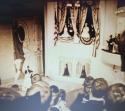
Are there any photos that exist of the inside of Grovers Theater circa 1865?
|
|
|
|
03-06-2014, 06:58 PM,
|
|
|
L Verge
Hero Member

|
Posts: 9,092
Threads: 493
Joined: Jul 2012
|
|
|
RE: Grovers Theater
I don't remember ever seeing a photo or illustration of the interior during the Civil War, but here is a description that I found online of its appearance in the early years:
On September 17, 1834, a gathering of patriotic citizens led by William Wilson Corcoran decided that our fledgling city deserved a magnificent theater worthy of the nation’s capital. They selected a site close to the White House, the social center of the federal government, and sold shares of stock to raise construction funds. The National Theatre opened its doors for the first time on December 7, 1835, with a production of A Man of the World, dazzling the opening night audience with its elegant interior. Cerulean Blue walls shimmered in candlelight below a domed ceiling filled with allegorical scenes; box tiers were decorated with depictions of historical events in diplomacy, maritime power, and agriculture. A portrayal of the Declaration of Independence supported by the Wings of Time surmounted the proscenium arch, and the theatre curtain was painted with an equestrian statue of George Washington with Mount Vernon in the distance.
I don't believe that Grover took over the management of the theater until the Civil War period, so this description may not be relevant to that era. When I was young, a trip to the National Theatre (its current name) was a treat. However, we never wanted to sit in the second balcony. It was on such a steep incline that walking down the stairs to your seat was a chore. I actually saw the mother of a friend sit down on the steps and descend that way because she was afraid of falling forward otherwise. Once you were in your seat, you could rest your head on the knees of the person behind you.
|
|
|
|
03-06-2014, 09:27 PM,
|
|
|
Tom Bogar
Senior Member
|
Posts: 171
Threads: 21
Joined: Jul 2012
|
|
RE: Grovers Theater
The best summary of the history of this wonderful theatre, with some good pictures, is still Donn Murphy, Roger Meersman, and Douglas Lee's Stage for a Nation: the National Theatre (1985). I just checked my copy, though, and it does not, alas, contain any photos of the inside of Grover's (just the familiar exterior shot). Reasonably-priced copies can be had at the all-too-addictive website Bookfinder.com:
http://www.bookfinder.com/search/?ac=sl&...%2520years
|
|
|
|
03-07-2014, 04:51 PM,
|
|
|
Anita
Legendary Member
|
Posts: 1,616
Threads: 94
Joined: Jul 2013
|
|
RE: Grovers Theater
Tom, thanks for recommending "Lee's Stage for a Nation: the National Theatre" by Donn Murphy, Roger Meersman, and Douglas. So much attention is paid to Ford's Theater because of the assassination that I haven't read much on the National Theater.
There's a free download copy of "The New National Theater, a history of Fifty Years" by Alexander Hunter written in 1885
https://archive.org/details/newnationaltheat00hunt I found this account very detailed and it has some illustrations of architectural features over those years.
Also there's a free download of "Lincoln's Interest in the Theater" by Leonard Grover https://archive.org/details/lincolnsinterest00grov
I didn't realize that on March 15, 1865 the Lincolns were accompanied to a performance of the Magic Flute at Grover's Theater by General James Grant Wilson and Clara Harris.
So much to learn and loving it.
|
|
|
|
03-07-2014, 04:57 PM,
|
|
|
John E.
Senior Member
|
Posts: 219
Threads: 29
Joined: Jul 2012
|
|
RE: Grovers Theater
One of the other interesting things I learned from Lawrence Gardner's article about being on the Montauk was that he met John Wilkes Booth for the first time (albeit briefly) at Grover's the day of the assassination.
I also found another account from a supposed Navy crewman who saw JWB's initials tattooed on the actor's forearm. I wish we could get to the bottom of where it was located for certain.
Ironically, the hotel clerk said the tattoo was on Booth's right hand in the space between the index finger and thumb. We know that isn't true -- Unless he had 2 tattoos. 
|
|
|
|
03-07-2014, 10:13 PM,
|
|
|
Tom Bogar
Senior Member
|
Posts: 171
Threads: 21
Joined: Jul 2012
|
|
RE: Grovers Theater
Also there's a free download of "Lincoln's Interest in the Theater" by Leonard Grover https://archive.org/details/lincolnsinterest00grov
I would caution anyone from giving too much credence to anything Grover said or wrote. Much of it is self-aggrandizing, exaggeration and/or downright made up from whole cloth.
|
|
|
|
03-08-2014, 06:02 AM,
|
|
|
RJNorton
Hero Member
|
Posts: 13,232
Threads: 556
Joined: Jun 2012
|
|
RE: Grovers Theater
(03-07-2014, 10:13 PM)Tom Bogar Wrote: I would caution anyone from giving too much credence to anything Grover said or wrote. Much of it is self-aggrandizing, exaggeration and/or downright made up from whole cloth.
Tom, unfortunately Grover's stories have made it into Lincoln books. In Diplomat In Carpet Slippers - Abraham Lincoln Deals With Foreign Affairs author Jay Monaghan tells the "drunken coachman" story as follows:
"A few days after Lincoln signed the Emancipation Proclamation, Leonard Grover sat in his office on the second floor of the National Theatre building in Washington. Pigeon-holes behind his desk were filled with bills, contracts, posters. On the wall actresses smiled at him through oval frames. A distant ripple of applause told Grover that the second act had finished. The house was full. President and Mrs. Lincoln sat in a proscenium box. Grover knew that Washington rowdies resented the Emancipation Proclamation. Would they make trouble for the President after the performance...?
"...Grover felt responsible for the President's safety. He knew Lincoln slightly and his little boy played often with Tad in the White House. When the last curtain bell rang, Grover went downstairs. The President and Mrs. Lincoln, with Congressman Schuyler Colfax, were walking out of their box. Grover showed them a side passageway to the street. Outside a crowd stood in a leering circle around the President's carriage. The driver staggered on the curb. His eyes were bleary, his face flushed. He was drunk. Lincoln helped his wife into the carriage. His long body followed her. Colfax scrambled after them and slammed the door. The coachman reached uncertainly for his seat and pulled himself up, then fell sprawling in the gutter. The bystanders laughed. Somebody threw a stone. A one-armed soldier boy on the driver's seat gathered up the lines. Grover leaped to the box, snatched the reins from the soldier and drove the carriage away."
|
|
|
|