| Welcome, Guest |
You have to register before you can post on our site.
|
| Forum Statistics |
» Members: 640
» Latest member: Eafshani
» Forum threads: 4,892
» Forum posts: 86,875
Full Statistics
|
| Online Users |
There are currently 586 online users.
» 1 Member(s) | 583 Guest(s)
Applebot, Google, Gene C
|
| Latest Threads |
Oliver H Powell at Stones...
Forum: Assassination
Last Post: jbarry
Yesterday, 06:40 PM
» Replies: 1
» Views: 164
|
Copies of Dr Leale's Acco...
Forum: Assassination
Last Post: jbarry
Yesterday, 04:59 PM
» Replies: 3
» Views: 463
|
Changing Look of Lincoln'...
Forum: Abraham Lincoln before his Presidency
Last Post: Gene C
Yesterday, 01:02 PM
» Replies: 0
» Views: 37
|
Who Said This?
Forum: Trivia Questions - all things Lincoln
Last Post: Gene C
09-27-2026, 05:00 PM
» Replies: 617
» Views: 1,346,953
|
Lincoln's Gloves
Forum: Assassination
Last Post: Steve
09-27-2026, 12:00 PM
» Replies: 1
» Views: 162
|
Springfield Tour
Forum: Other
Last Post: Gene C
09-27-2026, 07:22 AM
» Replies: 501
» Views: 1,478,721
|
Who is this person?
Forum: Trivia Questions - all things Lincoln
Last Post: RJNorton
09-15-2026, 10:50 AM
» Replies: 2,215
» Views: 5,789,825
|
Auction Sept. 9, 2026 Jun...
Forum: News and Announcements
Last Post: Anita
09-07-2026, 06:42 PM
» Replies: 0
» Views: 325
|
The Rambler - J Harry Sha...
Forum: Assassination
Last Post: Jim Woodall
09-02-2026, 03:39 AM
» Replies: 0
» Views: 451
|
An In Depth View Of Mary ...
Forum: Mary Lincoln and the Boys
Last Post: Juan Marrero
08-31-2026, 09:06 AM
» Replies: 5
» Views: 11,430
|
|
|
| Lincoln and John M. Palmer |
|
Posted by: Tom Emery - 02-26-2013, 08:44 PM - Forum: Abraham Lincoln before his Presidency
- Replies (2)
|
 |
I've always been interested in the relationship between Lincoln and John M. Palmer, a political associate from the President's Illinois days.
I'll offer this disclaimer; I live two blocks from the Palmer home in Carlinville, Illinois. But, I think there's plenty of other reasons to be interested in Palmer.
I've never felt that Lincoln had a lot of close friends, but I think Palmer could be argued as one of them. Palmer (1817-1900) was an Illinois state senator before the war, was a major general during the war, and was elected governor of Illinois in 1868. He served during the Chicago Fire of 1871. Later, he was a U.S. Senator (1891-97) and was a third-party Presidential candidate on the Gold Democrat ticket in 1896.
Palmer had worked against Lincoln for Congress in 1855, but Lincoln forgave Palmer, believing his motives to be sound. This was a hallmark of Palmer; even his political enemies conceded his honesty (an honest Illinois politican. He's in the minority, isn't he?). Palmer changed political parties five times in his career, mainly because of his impulsive, idealistic personality. He never saw political party as a lifetime commitment, or something you were bound to if you didn't agree with it (hence the name of his 1941 biography, A Conscientious Turncoat). He actually broke with the main Republican party while in the governor's chair, giving up a sure renomination.
Palmer presided at the inaugural Illinois Republican state convention in 1856.
Palmer was no political hack; he was a competent general. One contemporary, R.W. Johnson, called him "one of the ablest and best generals in the army." He rose to major general command of the XIV Corps. Lincoln later appointed him Military Governor of Kentucky.
Interestingly, Palmer would write searing letters to Lincoln to criticize fellow commanders (kind of a breach of military protocol), and often spoke his mind around Lincoln. In their last meeting in 1865, Lincoln was shaving (Lincoln had said, "You are home folks, and I must shave. I cannot do it before senators and representatives...but I thought I could do it with you." )
Palmer recalled the conversation: "Mr. Lincoln, if I had known in Chicago that this great rebellion was to occur, I would not have consented to go to a one-horse town like Springfield and take a one-horse lawyer and make him President."
Lincoln, "in an excited manner," said, "Neither would I, Palmer, If we had had a great man for the presidency, one who had an inflexible policy and stuck to it, this rebellion would have succeeded and the southern confederacy would have been established."
During her insanity trials, Mary Todd remembered Palmer's honesty and integrity -- as well as his political influence -- and enlisted him to help her regain control of her finances. Unlike many others, Palmer understood the difficulty of all sides -- Mary's predicament, Robert's tough choices, the Lincoln legacy, etc. -- and was much more concilliatory than others, such as Leonard Swett. I've always found it noteworthy that Mary felt Palmer was the man to help her, and that he didn't automatically write her off, as many others did. [/i]
It also shows that Mary, who could certainly be cagey, recognized the need for political influence; as Mark Neely writes in his excellent work on the insanity trials, Mary, when in trouble, thought less of justice and the legal system, and more of influence. Palmer certainly had that.
A 2005 study of Illinois U.S. senators listed Palmer as "second only to Lincoln" in 19th-century Illinois political history. Note that ranks him ahead of Stephen A. Douglas, mainly because Palmer was around longer; his career spanned over a half-century, while Douglas had died on June 3, 1861.
A statue of Palmer was dedicated on the grounds of the Illinois statehouse on Oct. 16, 1923, as a testament to his legacy in Illinois politics. Neely devotes an entry in his Abraham Lincoln Encyclopedia [i]to Palmer.
|

|
|
| Lincoln Letter to John Stuart |
|
Posted by: Craig Hipkins - 01-27-2013, 06:47 PM - Forum: Abraham Lincoln before his Presidency
- Replies (28)
|
 |
Ladies and Gents,
Some of you have probably already read the book Lincoln's Melancholy by Joshua Wolf Shenk. If you haven't read it I highly recommend it. I have kept it on my desk, and have been reading certain parts of it again. The book gives excellent insight into Lincoln's state of mind before and during his Presidency.
One of the things that Shenk mentions in the book is a letter that Lincoln wrote to his law partner John Stuart in January of 1841. This was shortly after his supposed break-up with Mary Todd. He writes:
I am now the most miserable man living. If what I felt were distributed to the whole human family there would not be one happy face on the earth. I must die or be better it appears to me. I awfully forbode I shall not. The matter you speak of on my account you may attend to as you see fit, as I fear I shall be unable to attend to business. If I could be myself, I would rather stay here with Judge Logan. I can write no more.
Although I am no doctor, and not really qualified to give a diagnosis for what Shenk calls "Lincoln's Melancholy", I believe that Lincoln might have had suicidal thoughts. The fact that he did not kill himself, but went on with life and persevered leads me to conclude that these suicidal thoughts might have been a sort of "fantasy." He might have asked himself the question "what if I were to kill myself?" The fact that he says "I must die or be better it appears to me" leads me to this conclusion. Why would he mention the word "die?" Curious to hear what others have to say about this.
Craig
|
|
|
|
| Young Mr. Lincoln |
|
Posted by: Martin Fass - 01-15-2013, 03:58 PM - Forum: Abraham Lincoln before his Presidency
- Replies (35)
|
 |
Having discovered this Symposium today, and because it appears nobody has called attention to "Young Mr. Lincoln," this is to do so. Especially in light of all the publicity and talk being given to "Lincoln," which is, for me, an excellent motion picture.
But--not to forget "Young Mr. Lincoln" from 1939, the picture by John Ford and starring Henry Fonda. It is readily available from Netflix and many other libraries and dealers. Have you seen it?
Among its other attributes, it is a feature length film that seems to be over in fifteen minutes. Absorbing, fascinating, beautiful, inspiring.
--Martin
Now I see that the movie HAS been discussed a bit here, including not so praiseworthy words about Henry Fonda. So it goes. I imagine people who prefer Hal Holbrook are likely to know already that Holbrook has a role in "Lincoln."
I happen to be strongly in favor of both Ford and Fonda, especially when they are together.
--Martin
|
|
|
|
| Sarah Rickard |
|
Posted by: Gene C - 01-09-2013, 03:01 PM - Forum: Abraham Lincoln before his Presidency
- Replies (27)
|
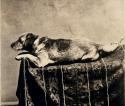 |
"And he was equally determined not to marry her (Mary Todd)
In fact, he was so dtermined that he proposed within a year to another girl. He was thirty two at the time, the girl he proposed to was half that age. She was Sarah Rickard, the little sister of Mrs. Butler, at whose house Lincoln had been boarding for four years."
from Lincloln the Unknown by Dale Carnegie. p63
The author seems to have borrowed a lot from William Hendon on the early life of Lincoln, so is there any truth to this?
|
|
|
|
| What exactly did happen on the "Fatal First?" |
|
Posted by: Mike B. - 11-24-2012, 12:29 AM - Forum: Abraham Lincoln before his Presidency
- Replies (5)
|
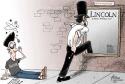 |
I know we have all heard of the "Fatal First of January '41."
This is the date that historians in the past have mostly given that as the date of the breaking of an engagement by Lincoln and Mary Todd.
(Nobody now accepts the story that Lincoln left Mary at the alter that day.)
However, over the past 20 years or so, there has been some feeling that the "fatal first" has nothing to do with a broken engagement since Mary and Lincoln may not have even both been in Springfield that day.
Here is part of the text that the phrase comes from in a letter from Lincoln to Joshua Speed:
"To Joshua F. Speed
Dear Speed: Springfield, March 27th. 1842
...But on that other subject, to me of the most intense interest, whether in joy or sorrow, I never had the power to withhold my sympathy from you. It can not be told, how it now thrills me with joy, to hear you say you are ``far happier than you ever expected to be.'' That much I know is enough. I know you too well to suppose your expectations were not, at least sometimes, extravagant; and if the reality exceeds them all, I say, enough, dear Lord. I am not going beyond the truth, when I tell you, that the short space it took me to read your last letter, gave me more pleasure, than the total sum of all I have enjoyed since that fatal first of Jany.'41. Since then, it seems to me, I should have been entirely happy, but for the never-absent idea, that there is one still unhappy whom I have contributed to make so. That still kills my soul. I can not but reproach myself, for even wishing to be happy while she is otherwise. She accompanied a large party on the Rail Road cars, to Jack-sonville last monday; and on her return, spoke, so that I heard of it, of having enjoyed the trip exceedingly. God be praised for that.
You know with what sleepless vigilance I have watched you, ever since the commencement of your affair; and altho' I am now almost confident it is useless, I can not forbear once more to say that I think it is even yet possible for your spirits to flag down and leave you miserable. If they should, dont fail to remember that they can not long remain so.
One thing I can tell you which I know you will be glad to hear; and that is, that I have seen Sarah, and scrutinized her feelings as well as I could, and am fully convinced, she is far happier now, than she has been for the last fifteen months past..."
Lincoln is happy that Speed is happy in his new marriage and sad and guilty about his own behavior to Mary Todd.
But what is the "fatal first?"
Douglas Wilson has surmised it has something to do with Speed and not Lincoln.
If so, there is a hint I think in what Lincoln says about "Sarah" or Sarah Rickard. When Speed showed Herndon these letters he wanted to make sure that Herndon left her name out of the story.
Rickard at the time was a teenager. Speed was considered by some a bit of a wild lady's man. Is it possible Lincoln is referring to some sexual encounter Speed had with Rickard on New Year's Day that they both regretted and Speed may have referred to it to Lincoln as "the fatal first" in shorthand between them?
The fifteen months from when the letter is written takes us back to about January 1841. Is Lincoln's "scrutinizing" Sarah's feelings mean she has come to terms with what happened and is no longer upset and Lincoln is trying to assuage any guilt Speed had?
Any other theories? Or am I way off?
|
|
|
|
| "Herndon was born mediocre" |
|
Posted by: Rob Wick - 11-20-2012, 08:51 PM - Forum: Abraham Lincoln before his Presidency
- Replies (44)
|
 |
Going through Tarbell's papers, I found a letter in which the writer told Tarbell his opinion that William Herndon was "born mediocre and of course never discovered the fact."
Tarbell didn't have much use for Herndon generally, and it seems most Lincoln aficionados either hate him or strongly support him. Of course, there was what can only be called a cheap shot at Mary Todd Lincoln where Ann Rutledge is concerned (which doesn't make his story any less true), but what about Herndon generally? Does he deserve a poor reputation or has he been treated shabbily in history's eyes?
Best
Rob
|
|
|
|
| Fisher Murder case |
|
Posted by: Gene C - 11-03-2012, 11:16 AM - Forum: Abraham Lincoln before his Presidency
- Replies (11)
|
|
From Benjamin Thomas's biograpy of Lincoln, (last page of Chpt 5)
"Lincoln sent Johnson one effort in prose, an account of the Fisher murder case in Springfield, in which, after a confession by one of three brothers named Trailer, who had allegedly committed the crime, the supposed victim turned up alive."
Does a copy of the prose exist, and is it on line?
Anyone know more details about this murder case?
|
|
|
|
| An "out-of-character" moment for Lincoln? |
|
Posted by: LincolnMan - 10-20-2012, 06:11 AM - Forum: Abraham Lincoln before his Presidency
- Replies (48)
|
 |
The following story was gleaned from the book Lincoln Shot: A President's Life Remembered by Barry Denenberg concerning an episode in Lincoln's life about a "wife beating." I had made a post about it on my Lincoln blog some time ago. See what you think-does it sound like something lincoln would do? Or is it more of a tale?
A “wife beating?,” you say? Well, it was not exactly what you might have been thinking. It wasn’t the wife being “beat”- it was the wife beating her husband. Her husband, you see, was tied to the town square whipping post. It happened in early Springfield. She was using a limb and, apparently, gave her man a thrashing. He was a shoemaker by trade. He was also said to be an alcoholic who physically abused his wife on more than one occasion. He had been warned that if he ever beat her again-he would be whipped himself. So when the news came that he did it again, he was dragged to the courthouse, stripped of his shirt, and tied to the post out in back of the building. That could not have been pretty. There were several men involved in the ”capture” of the abuser. Then his wife was sent for. She was up to the task. As she began her whipping of her husband, the men in the party of the vengeful episode sat down and watched. Finally, when the “leader of the pack” felt that the husband had received enough punishment- he was released. The men helped him put his shirt back on and he walked away from the scene cursing and promising vengence himself. The “leader of the pack” of the “rowdies” that aided the battered wife? You know him. His name was ABRAHAM LINCOLN. As far as is known, the husband stopped his physical abuse of his wife. He also didn’t perform the vengence on the men he swore he’d do.
|
|
|
|
|