|
03-26-2016, 10:52 PM,
|
|
|
L Verge

Hero Member

|
Posts: 9,092
Threads: 493
Joined: Jul 2012
|
|
RE: Extra Credit Questions
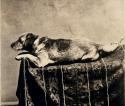
Here's a good site for a brief synopsis of how Douglas the Camel came to be part of American history:
http://www.weirdca.com/location.php?location=36
I first ran into the story years ago while trying to prove or disprove a story that the Surratts' eldest son, Isaac Douglas Surratt, left home on Inauguration Day in 1860 and headed west to become a Pony Express rider. I eventually determined that he did leave home on that day and did head west, but most likely under the employ of Benjamin Ficklin, who had originally conceived of a service such as the Pony Express but ended up running his own express company. Isaac appears to have dropped off in Texas and joined a Confederate cavalry unit there where he participated in the Trans-Mississippi portion of the Civil War and was one of those who went into Matamoros, Mexico.
It was while reading about the Pony Express that I ran across the story of The Camel Corps and Jefferson Davis's dealings with it while serving under President Buchanan. Benjamin Ficklin proved to be an interesting sidelight also. One of the First Families of Virginia, graduate of VMI even after being expelled for firing a howitzer at one of the buildings, creator (in thought) of the Pony Express, one-time owner of the decaying Monticello, arrested on Pennsylvania Avenue the day after Lincoln's assassination and detained for several months until it was proven that he was supposed to meet with Lincoln to discuss plans.
Sad ending to his story (just like Old Douglas) when he choked on a bone while dining at the Willard Hotel. He lingered while various attempts to dislodge the bone failed. The final attempt caused the bone to puncture an artery, and Ficklin bled to death.
|
|
|
|
03-29-2016, 12:14 PM,
|
|
|
RE: Extra Credit Questions
(03-25-2016, 03:41 PM)RJNorton Wrote: David, Gideon Welles writes about this in his diary here.
Shelby Foote adds the following first-hand quote account that is not in the Welles' diary book: He thought it might also inspire Meade, and he had Halleck pass the word to him that Vicksburg had surrenedered; "Now if General Meade can complete his work so gloriously prosecuted thus far . . . the rebellion will be over."
"So very difficult a matter is it to trace and find out the truth of anything by history." -- Plutarch
|
|
|
|


 Extra Credit Questions